
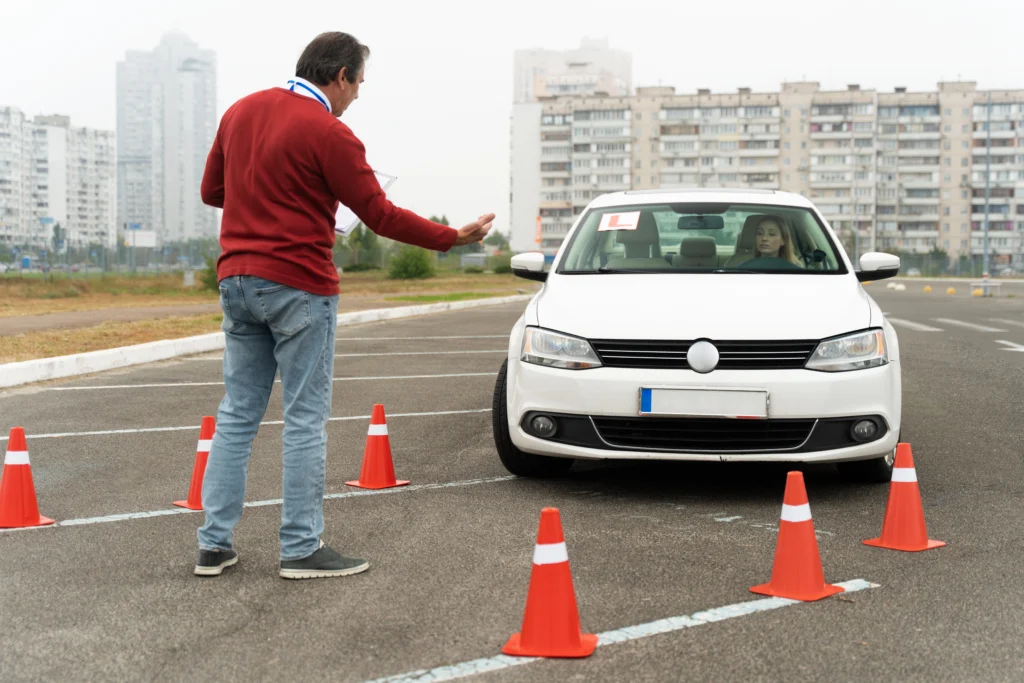
How to Pass Your Calgary Class 5 Driving Test on the First Try
Passing 1st time is not about memorizing a route or driving perfectly. It’s about demonstrating observation, safe judgment, control and the ability to respond calmly to changes in traffic.
On various Calgary roads, practice full stops, shoulder checks, lane changes, parking, speed control and intersection decisions. A focused lesson can uncover habits that are affecting your performance.
Understand What the Examiner Needs to See
The Calgary driving test class 5 assesses your ability to drive safely without continued instruction. Examiners will be watching how early you pick up on hazards, whether you check your blind spots, how smoothly you brake and whether your decisions are predictable.
Look before you move at intersections. Before you change lanes, check your mirrors, signal, do a shoulder check, and only move when the space is safe.
Practice on Different Calgary Roads
Repeating one neighborhood can lead to false confidence. Drive through residential areas, school zones, multi-lane roads, hilly areas, busy intersections and areas with parked vehicles. Calgary traffic can change on a dime, so you’ve got to adjust without rushing.
Your preparation needs to stay focused on the test vehicle, but the observation and space-management principles taught in Truck driver training in Calgary illustrate why disciplined practice is important.
Use Training That Targets Weak Areas
A professional Class 5 lesson can identify late signaling, inconsistent speed, wide turns, poor mirror routines, or poor lane position. Brush-up lessons are good if you know the basics, but they need more consistency.
If your car is not available or not suitable, renting a vehicle can be useful. Practising in the same car can make steering, braking, visibility, and parking feel more familiar.
Prepare the Vehicle Before Test Day
A road test may be refused if the vehicle is unsafe or does not meet the legal requirements. Before you leave, check your signals, brake lights, mirrors, tires, seat belts, windscreen, horn, and registration.
When your own car is not available or suitable, vehicle rental can be of assistance. You may find it less stressful to practice in the same car, because you know the steering, the brakes, the visibility, and where to park. The school does provide services like rentals.
FAQs
How many lessons should I take before the test?
The number of lessons you will need depends on your driving experience, confidence and how often you practice. A professional evaluation can determine whether a full training program or just a few lessons to brush up on skills like parking, observation, or traffic decisions is in order before your road test.
What should I practise most before test day?
Concentrate on the important skills that are tested in the road test, like shoulder checks, proper stopping, lane positioning, speed control, parking, and right of way. If you practice these regularly in varying traffic conditions, you will feel more confident on the day of the test.
How can I control nervousness during the test?
Arrive early, adjust your seat and mirrors, and take a few minutes to get comfortable before you drive. Follow every instruction carefully, stick to just one thing at a time, and bear in mind that a small mistake does not necessarily mean you have failed the test.
Why is practicing in the test vehicle helpful?
Practicing in the same car will help you get used to the steering, braking, mirrors and parking reference points. This will reduce hesitation, improve your vehicle control, and allow you to focus on driving with confidence on your road test.
Conclusion
Good habits, not shortcuts, will get you to pass the first time. Changing conditions. Watching carefully, moving deliberately and using good judgment makes you safer and more confident.
Practice with purpose, work on your weak spots before test day, and treat every practice drive as an opportunity to develop independent decision-making. This leads to better driving and safer driving later on.


