What Is a Defensive Driving Class and Why Is It Important in Calgary?
Calgary weather and traffic change without much warning. One hour it’s clear, the next it’s ice or glare or a sudden lane closure. A good driving course teaches you to notice these problems before they turn into accidents, instead of just reacting when it’s too late.
Whether you’re getting a commercial license or just want to feel safer on the road, this kind of training saves money, prevents accidents, and builds real confidence.
Why Good Drivers See Trouble Before It Happens
Talk to anyone who’s been driving for years, and they’ll tell you the same thing: it’s not about fast reflexes. It’s about noticing things early. A defensive driving class teaches you to look further down the road, so you catch the warning signs before they become a problem. Brake lights flashing up ahead. A patch of ice you can’t quite see yet. Someone drifting into your lane because they’re on their phone.
In Calgary, this matters even more. A Chinook wind can melt the highway by noon and turn it back to ice by evening. Deerfoot Trail can go from smooth to jammed in minutes. And out past the city, near the Foothills, you’ve got deer crossing the road and wind gusts strong enough to push a loaded truck sideways. This isn’t rare; it happens all the time.
It’s Not Just About Passing A Test
A lot of people think this course is just something you do to get your license and move on. But it’s really about building habits, keeping the right distance from the car ahead, braking properly on wet or icy roads, and staying calm when something unexpected happens.
For commercial drivers, finishing this training can even get you a discount on insurance. Most new drivers don’t find this out until they’ve already paid full price for a whole year.
What Affects the Cost Of Lessons
If you’ve looked into driving lesson prices in Calgary, you’ve probably noticed the prices are all over the place. A few things usually explain why:
- An Instructor Experience: someone who’s been teaching for years often charges more, but they also catch mistakes faster
- Type of vehicle: training on a commercial truck or larger vehicle usually costs more than a regular car
- Number of driving hours: more time behind the wheel means better skills, but also a higher price
- Classroom sessions included: some courses that combine theory with road practice, which adds to the cost but fills in the gaps
Going with the cheapest option isn’t always smart. A course that skips the real hazard training can end up costing you more later, through tickets, higher insurance, or worse.
Learning Through Real Situations, Not Just Rules
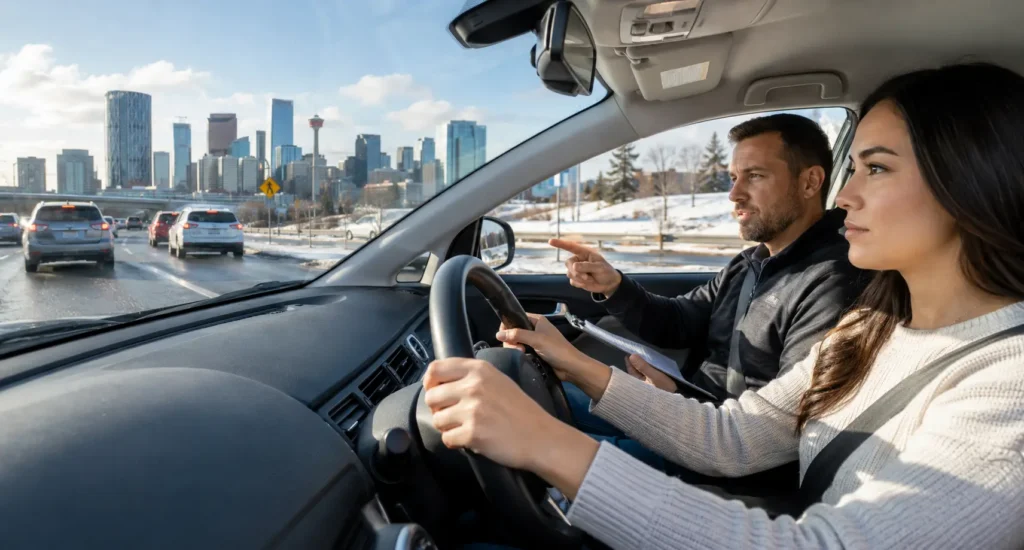
The best instructors don’t just tell you the rules; they put you in real situations. A lane suddenly closes. A car ahead is losing control on the wet pavement. A school zone right at pickup time.
You go through it, learn how to stay calm, and figure out the right way to respond. Over time, this becomes second nature. That’s really the goal of a driver who sees things coming instead of just reacting to them.
FAQs
Is this training only for new drivers?
Negative. It is a good place to start for beginners, and just as good a place to learn for experienced drivers. Refresher courses are taken by many commercial drivers and long-time car owners to improve driving habits, stay current on road regulations, and build confidence behind the wheel.
How long does a typical course run?
Most driving courses are spread over a few sessions and include both classroom and on-road training. The total length of the course will vary depending on the license class, your previous driving experience and how much hands-on practice you need to complete the course requirements.
Will completing a course lower my insurance?
Yes, in lots of cases. Many Alberta insurance companies will give you a discount if you take a recognized driving course. The exact amount of savings varies by insurer, so it’s a good idea to contact your insurance company to find out what discounts could be available.
Do commercial drivers need this in addition to standard licensing?
Yes, in most cases. Commercial drivers are often required to complete additional training beyond a standard driver’s license to meet industry and employer expectations. It also helps ensure compliance with safety standards and prepares drivers for the responsibilities of operating commercial vehicles.
Conclusion
Calgary doesn’t ease new drivers in gently; it tests them from the first winter storm. A structured course builds the judgment that keeps you calm when conditions turn, and it’s an investment that protects both your safety and your wallet for years to come.
At the end of the day, driving well isn’t about luck. It’s about being ready before things go wrong, not after. That one shift in mindset is often what separates a close call from a real accident, and it’s worth taking seriously.


